
 At 354pm, on a sunny Tuesday Chicago afternoon, Bethenny Frankel, Founder of ‘Skinnygirl Cocktails’, philanthropist, American TV personality, and former cast member of Real Housewives of New York, was dressed casually. She was outraged at how Chanel, the uber luxury store, treated her after she was turned away, as she revealed on Instagram.
What could Chanel have done to minimise a total of six reels (so far) and over 102K views, and counting, of her parody Chanel’s faux pas? Exactly what global companies such as BMW, L’Oreal, PayPal, Hyatt Hotels and Mercedes have done, and that is to provide their staff training on professional and business etiquette! Gone are the days of finishing schools and mandatory ‘fork and knife classes’ in the military. In the 90s, I, for instance, found that business etiquette training at TAFE was a rarity. Today, while free resources abound online, the rise of social media influencers and AI assistants, often with disclaimers about accuracy, can leave us wondering where to turn for reliable guidance. ResumeBuilder.com, in July 2023, reached out to 1,548 business leaders, surveying them to find out how many businesses will get office etiquette training for their employees. ResumeBuilder.com found that:
Where was it all going wrong for these business leaders, and why are they offering business etiquette classes to their employees? The Telegraph’s recent article, ‘Hiring Gen Z is a nightmare – they don’t turn up to their first day of work,’ interviewed recruiters who cited issues such as:
This shift has created a gap in essential skills, from work-appropriate attire and speaking correctly to writing an email without double meanings or emojis. Mastering these seemingly simple arts can make a big difference in how employees can be good business representatives. We can also learn several things from Bethenny Frankel’s and mega stock-market performers. In a word, that would be soft skills. You may ask, what are soft skills? The oxfordlearnersdictionaries.com defines soft skills as “personal qualities that enable you to communicate well with other people”. Employees should have good personal qualities to communicate with a team, customers, clients, and supervisors, such as interpersonal skills, teamwork, customer service, and presentation skills. Interpersonal skills, also sometimes called people skills, are incredibly important. They are the foundation of our ability to interact and communicate with others in a positive and productive way. Employees who build rapport, practice active listening, and demonstrate empathy can navigate potentially tense situations more effectively. Customer service skills are essential in any role that involves direct or indirect interaction with customers, clients, or the general public. Understanding customer needs, offering solutions, and maintaining a professional demeanour is essential for building trust and generating positive experiences. Teamwork skills are a set of interpersonal and collaborative abilities that enable individuals to work effectively and harmoniously with others towards a common goal, propagating a good work culture. Effective communication and collaboration within teams ensure a unified approach to customer service, even in challenging situations. Presentation skills encompass the ability to convey information and ideas effectively through both verbal and nonverbal communication. These skills involve maintaining appropriate body language, eye contact, and appearance and practising delivery to ensure clarity, confidence, and engagement. Clear, confident communication builds brand image and ensures customers feel heard and understood. Conclusion The public dressing down Bethenny Frankel gave Chanel on social media is a stark reminder of soft skills' power in shaping customer experiences. In today's digital age and competitive marketplace, a negative interaction amplified by social media reach can significantly damage a brand's reputation. Frankel's experience highlights the importance of equipping and investing in staff with strong interpersonal, customer service, teamwork, and presentation skills, regardless of industry. Soft skills are no longer a nicety but a business imperative. What will you do? Article Published In: LinkedIn
0 Comments
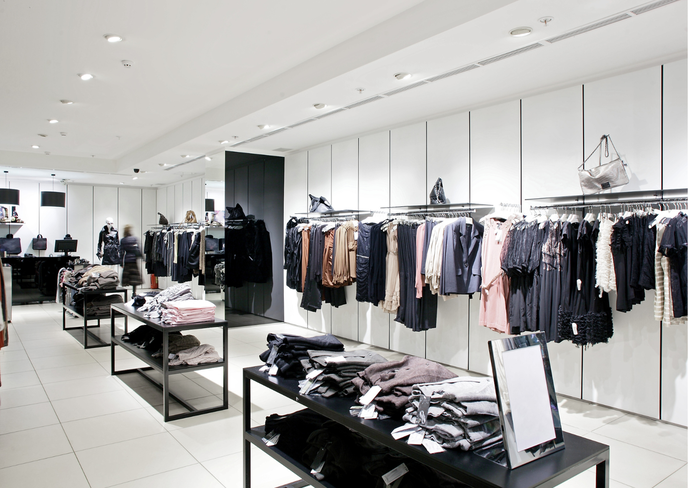 In 2023, global retail e-commerce sales reached an estimated 5.8 trillion U.S. dollars, according to Statista. The Financial Times indicated that retail sales in India were valued at $836 billion. So, what is it like to shop in a mall or retail store in India?
I dread the time that I need to shop. It is an eye-rolling, in-personalised service that lacks initiative. Strong words you are probably thinking. My story continues. Upon entering a store, I will get either of four responses from customer service personnel:
I have found that I get better service with a smile at markets crammed to the hilt and surging with hundreds of shoppers, as opposed to the mechanical and passionless vibe of a retail store. Here, the motivations and management styles are definitely different. It’s not all bad. I have received exceptional service at the Taj Hotel, Mumbai, where the service staff are alert to customers and walk-ins' needs. This proves that training is key, taken seriously is very effective. Retail stores should strategically view sales training, like the Taj, as a pivotal tool for managing and enhancing their sales personnel's performance. In the article ‘Service Orientation and Customer Performance: Triad Perspectives of Sales Managers, Sales Employees, and Customers’ by Ho-Taek Yi et al. highlights “sales employees provide physical labor, emotional labor, and sales expertise.” So, how can owners or department heads do to enhance and support their staff to out-perform other stores in great customer service? Verbal Communication This is when you use spoken words to convey messages, thoughts, ideas, and information between people. It involves using language to express oneself through speaking, listening, or a combination of both. Effective verbal communication consists of articulating one's thoughts clearly and concisely and actively listening to and understanding the messages conveyed by others. It plays a crucial role in everyday interactions, personal relationships, professional settings, and virtually every aspect of human interaction. Non-Verbal Communication Refers to transmitting messages, feelings, and information through forms of expression such as facial expressions, body language, gestures, posture, eye contact, and even clothing choices. Non-verbal cues often complement or reinforce verbal communication, providing additional context and emphasis or influencing clients' emotional states. Etiquette Communication Yes, various studies widely recognise etiquette as a form of communication, highlighting its critical role in society and interpersonal interactions. Etiquette involves adhering to established norms of conduct to maintain suitable manners and mutual respect, paramount for effective communication within different contexts. When customers enter a shop, they look for authenticity and an employee’s courtesy, friendliness and dedication to authenticity. Demonstrating authenticity can transform a customer's negative emotional state into a positive one. Here is an Example In a department store, verbal communication is evident as the sales associate greets the customer warmly and engages in a dialogue to address their needs. Through clear and concise language, the associate provides product information and offers personalised recommendations, demonstrating proficiency in verbal communication skills. Non-verbal communication is also at play as the associate uses friendly facial expressions, gestures, and body language to convey approachability and attentiveness. Maintaining eye contact and nodding in acknowledgement further enhances the interaction, signalling active listening and empathy. Also, etiquette communication is shown through the associate's professionalism and courtesy throughout the exchange. By respecting the customer's time, offering assistance without being intrusive, and expressing gratitude for their patronage, the associate upholds etiquette norms that contribute to a positive customer experience. Conclusion In summary, when good customer service communication is used, it creates positive emotions and connections to cultivate brand loyalty in the retail environment. Don’t be fooled and think one shot of training will the pill that cures it all, it takes time to become proficient in these skills and lots of trial and error when earnestly practiced by staff. And always remember customers to perceive superior service quality, they require positive service interactions. Article Published In: LinkedIn |
AuthorElizabeth Soos Archives
July 2026
Categories
|
 RSS Feed
