
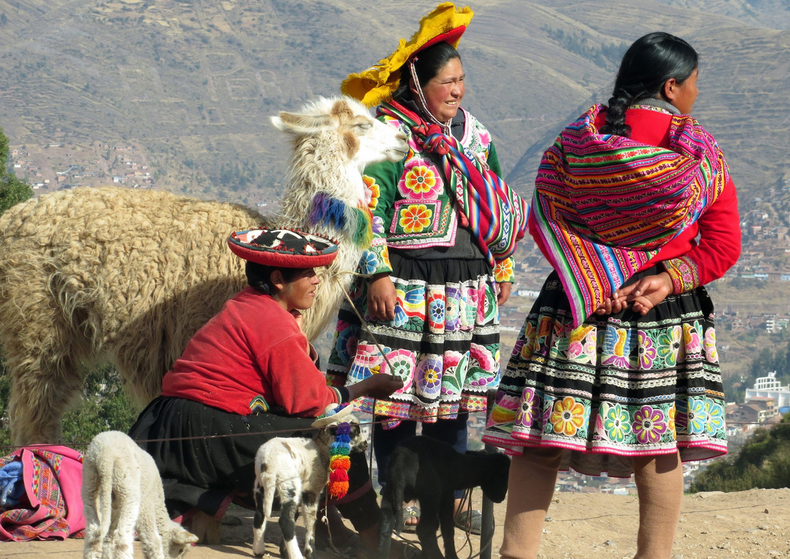
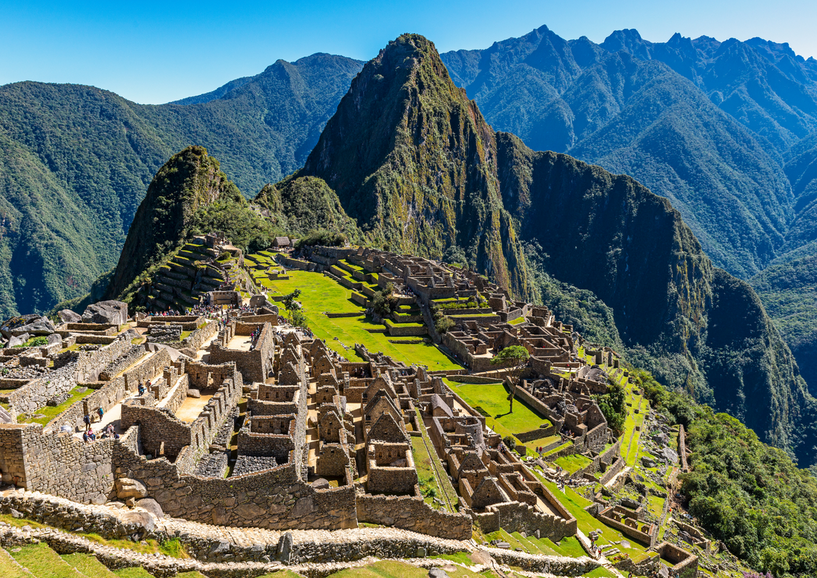
 I grew up with my nose buried in Enid Blyton's Famous Five and Secret Seven, and later devoured every page of Carolyn Keene's Nancy Drew mysteries. Those stories ignited my passion for solving mysteries and unravelling intrigue. As a teenager, my imagination was set ablaze by the cinematic magic of Indiana Jones and the Raiders of the Lost Ark—a whirlwind of treasure-hunting adventures spanning South America to the Middle East. So, when the opportunity to visit Peru arose, I didn’t just say yes—I was all in. The Backstory of Peru Archaeologists have discovered that Peru’s rich history spans thousands of years over 15,000 years, beginning with the ancient Norte Chico civilization to the Moche, Nazca, and Chavín, then to the Inca Empire in the 15th century. The Spanish conquest in 1532, led by Francisco Pizarro, toppling and plundering the Incas, led to the colonization of the region and a fusion of Spanish and indigenous cultures. Peru gained independence in 1821, driven by revolutionary leaders like José de San Martín and Simón Bolívar. Today, it reflects a mixture of ancient sites, colonial architecture, diverse cultures and many languages. What Not To Say or Do with Peruvians When interacting with Peruvians, it's important to be mindful of certain cultural sensitivities, such as:
 Social and Greeting Etiquette
Peruvians place great importance on introductions and greetings. Common greeting phrases include “buenos días” -good morning, “buenas tardes” - good afternoon and “buenas noches” for good evening. The greeting is done by a firm handshake and eye contact, while professionals are addressed by their titles, especially in formal settings or when meeting someone for the first time. This is a way to acknowledge and welcome individuals into a home or business. Among friends and family, the “abrazo” or embrace, is common, consisting of a handshake and hug between men or a hug and kiss on the right cheek between women. Men often add a pat on the back when greeting close friends or family. Addressing people is also culturally significant. Friends often use first names or nicknames. Older individuals are typically addressed as “Señor” or “Señora” followed by their surname, or more informally as “Don” or “Doña” with their first name. Explore Peruvian Dining Etiquette The traditional cuisine of Peru is deeply embedded in the nation's cultural and culinary heritage. Iconic dishes include ceviche, and fresh raw fish marinated in lime juice and served with sweet potatoes and corn, which are best eaten fresh with a fork to combine the flavours. Popular street foods like anticuchos (grilled beef heart skewers) are eaten straight off the stick with lime and spicy sauce, while hearty Andean dishes like pachamanca are earth-cooked meals of marinated meats and vegetables, enjoyed family-style, and fingers can be used to eat this amazing meal. Peruvians enjoy a variety of meats that may be considered exotic elsewhere, which I did try whilst travelling through Peru. Cuy (guinea pig), a traditional Andean delicacy, are often roasted or fried and has a tender, gamey flavour, which I really enjoyed. Alpaca and llama meat, both lean and protein-rich, are common in the Andes, with alpaca offering a mild, slightly sweet taste and llama resembling lamb or venison. I found the meat to be quite fatty, which makes sense given that these animals spend much of their time in cold environments, requiring extra fat for insulation. Reflecting on my journey through Peru, I couldn’t help but feel like I was channelling Indiana Jones himself. As Indy once said, “It's not the years, honey, it's the mileage,” and my time in Peru added miles of unforgettable experiences to my life’s map. Peru’s treasures—its culture, cuisine, and people—proved to be as priceless as any artifact Indy might have sought. It was an adventure that deepened my appreciation for this remarkable country. Article Published By: Etiquipedia.blogspot.com
0 Comments
Leave a Reply. |
AuthorElizabeth Soos Archives
July 2026
Categories
|
 RSS Feed
